7 Tips Why Are Synthetic Air Filters Better Than Paper?

Time:2026-10-05 Author:Ethan
0%

Synthetic air filters are changing how drivers and equipment owners think about routine air filtration. Unlike traditional paper media, synthetic fibers can offer stronger construction, steadier airflow, and better moisture resistance. That sounds straightforward. Real performance depends on filter design, equipment specifications, and maintenance habits.

So, why are synthetic air filters better than paper ones? In many applications, layered synthetic fibers capture dust while maintaining useful airflow across a wider service interval. A well-made filter may also resist collapsing under vibration, humidity, or repeated handling. Technicians often notice this during inspections. The media feels more stable, and the pleats remain defined instead of becoming soft or distorted. These observations support manufacturer data, but they should not replace independent testing or equipment recommendations.

Cost still deserves honest consideration. Synthetic filters can cost more initially, and not every engine gains the same benefit. A vehicle used on clean city roads may show little difference from a quality paper filter. In dusty workshops, rural routes, or severe operating conditions, durability and filtration consistency may matter more. This guide examines seven reasons synthetic air filters may outperform paper alternatives, including airflow, service life, moisture resistance, and environmental trade-offs. Some claims require closer inspection. Filter efficiency, fit, and replacement timing remain decisive. A premium material cannot fix poor installation.
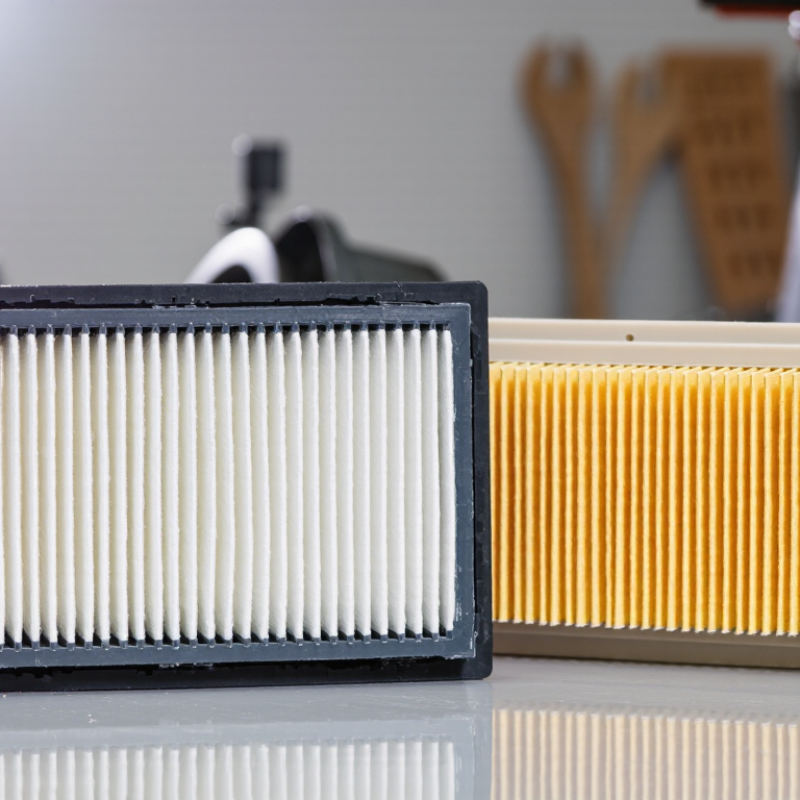
7 Tips Why Are Synthetic Air Filters Better Than Paper?

What Synthetic Air Filters Are and How They Work

Synthetic air filters are made from manufactured fibers, commonly polyester or polypropylene, rather than cellulose paper. These fibers are arranged in layers and folded into pleats, creating more filtering area inside a compact frame. Their structure looks simple, but the filtration process is quite active.

As air passes through, larger dust particles collide with fibers and become trapped. Smaller particles may stick through interception, diffusion, or electrostatic attraction. Some synthetic media receive an electrical charge during production, helping them capture fine particles without making the material extremely dense. This can support steady airflow in heating, ventilation, and air-conditioning systems.

In practical maintenance work, synthetic filters often handle humidity better than ordinary paper-based media. They are also less likely to tear during installation or removal. That matters when the filter is fitted into a tight cabinet with dusty hands. However, “better” depends on the system. A highly efficient filter can increase resistance when it becomes loaded with dust. The blower may then work harder, and comfort can decline.

Filter performance should be checked through published test data, not appearance alone. A bright white surface proves very little. Inspect the pleats, frame seal, pressure drop, and recommended replacement interval. One detail is easy to overlook: even a good synthetic filter performs poorly when air bypasses it through a damaged gasket. No filter is perfect. Room conditions, airflow, and maintenance habits still change the result.

How Synthetic Fibers Capture More Airborne Contaminants

7 Tips Why Are Synthetic Air Filters Better Than Paper?

Synthetic air filters can capture more airborne contaminants because their fibers are often finer and more evenly arranged. This creates a deeper filtering path for dust, pollen, mold spores, and other particles. Paper media may trap larger debris well, but it can load unevenly. Synthetic fibers also resist moisture better, which helps maintain their structure in humid equipment rooms.

Tip 1: Check the filter’s efficiency rating, not just its material. A high-quality paper filter may outperform a low-grade synthetic filter. Airflow matters too. During routine HVAC inspections, technicians often find that a clogged filter reduces system performance, even when its capture rating looks impressive. Small details matter.

Tip 2: Look for electrostatic properties. Some synthetic fibers hold a mild charge that attracts airborne particles without greatly restricting airflow. This can improve capture of smaller contaminants. Still, performance changes with dust buildup, humidity, and installation quality. Synthetic is not automatically superior.

Tip 3: Install the filter in the correct direction and replace it on schedule. A loose edge can allow dirty air to bypass the media. That mistake is easy to miss. I have also noticed that real rooms rarely match laboratory conditions perfectly. Cooking smoke, pet hair, and construction dust can change results quickly, so practical inspection remains important.

7 Tips Why Are Synthetic Air Filters Better Than Paper? - How Synthetic Fibers Capture More Airborne Contaminants
No. Performance Dimension Paper or Cellulose Media Synthetic Fiber Media Why Synthetic Media Can Perform Better
1 Particle-Capture Efficiency Captures particles through interception, impaction, and diffusion. Efficiency depends strongly on fiber structure, media density, and filter design. Can combine mechanical filtration with electrostatic enhancement. Properly engineered synthetic media can improve capture of fine particles without requiring a very dense structure. Finer, more uniform fibers and electrostatic charge can increase the probability that airborne particles contact and remain attached to the media.
2 Airflow and Pressure Drop Dense cellulose media may produce higher initial resistance when designed for higher particle capture. Many synthetic designs use a lofted, layered structure that provides more open airflow pathways. Actual pressure drop varies by thickness, face velocity, and efficiency rating. A more open fiber arrangement can help deliver effective filtration with lower resistance, which may reduce the airflow burden on a fan or HVAC blower.
3 Dust-Holding Capacity Holds dust effectively, but compacted cellulose fibers can reduce available airflow passages as loading increases. Multi-layer synthetic media can distribute dust through a greater portion of the filter depth instead of relying only on surface loading. Depth loading can maintain usable airflow for longer. Dust-holding capacity is not determined by fiber type alone; media area, pleat depth, and filter construction also matter.
4 Moisture Resistance Cellulose fibers are naturally hydrophilic and can weaken, swell, or lose dimensional stability when exposed to high humidity or liquid water. Common synthetic fibers such as polypropylene and polyester are hydrophobic and generally retain their structure better in humid conditions. Better moisture resistance helps preserve pleat shape, airflow channels, and mechanical integrity during humid operation or limited incidental moisture exposure.
5 Fiber Shedding and Structural Stability Cellulose media can be more vulnerable to fiber breakage when repeatedly flexed, wetted, or handled improperly. Thermally bonded or resin-bonded synthetic fibers can provide stable layers with good resistance to handling and vibration. Stronger bonding can reduce media deformation and help maintain a consistent filtration path over the service life. Filter integrity still depends on the frame, seals, and bonding method.
6 Performance Consistency Natural fibers can vary in length and morphology. Manufacturing quality and treatment determine the uniformity of the finished media. Manufactured fibers can be controlled for diameter, orientation, basis weight, and layer distribution during production. More controlled fiber geometry can support consistent pressure drop and particle-capture performance from one production batch to another.
7 Energy and Service-Life Considerations A cellulose filter may be economical and effective, but a loaded or moisture-affected filter can experience increased resistance and reduced airflow. A well-designed synthetic filter may maintain airflow more effectively while loading, although the result depends on the filter's tested efficiency and pressure-drop values. Lower resistance at the required efficiency can reduce fan energy demand. Select filters using verified test data, and replace them according to pressure drop, condition, or the manufacturer's service guidance.

Technical note: Synthetic media are not automatically superior in every application. Compare filters using standardized particle-efficiency and pressure-drop test results, such as ASHRAE 52.2 MERV data or ISO 16890 ePM ratings. Actual performance depends on media construction, pleat area, airflow rate, installation quality, and the seal between the filter and its housing.

Why Synthetic Filters Offer Better Durability and Moisture Resistance

7 Tips Why Are Synthetic Air Filters Better Than Paper?

Synthetic air filters often handle moisture better than paper media. Their plastic-based fibers do not soften as quickly when exposed to condensation, humid air, or occasional water droplets. In practical use, the filter frame stays more stable, and the pleats are less likely to sag. That matters in rooftop units, workshops, and vehicles parked outdoors. Still, synthetic does not mean waterproof. Poor drainage can damage any filter.

Durability is another clear advantage.

Synthetic fibers usually tolerate vibration and repeated airflow changes better than fragile cellulose fibers. ASHRAE Standard 52.2 evaluates particle removal through MERV ratings, not material alone. For example, MERV 13 requires at least 85% efficiency for 1–3 micrometer particles under the standard test method. The media must maintain its shape while air moves through it. That is the practical point.

Moisture can change performance.

The U.S. Department of Energy notes that restricted airflow increases system energy use and reduces equipment performance. A wet or collapsed paper filter can create that restriction quickly. Synthetic media may last longer in damp conditions, but service life still depends on dust loading, airflow, and maintenance. This is where many claims become too confident. A field inspection remains more useful than a brochure. Check pleat deformation, pressure drop, and visible dampness before extending replacement intervals.

How Airflow, Energy Use, and Maintenance Compare with Paper Filters

7 Tips: Why Are Synthetic Air Filters Better Than Paper?

When comparing synthetic and paper air filters, look beyond the purchase price. Airflow is the practical starting point. Many synthetic media use consistent fibers, which may reduce resistance when correctly sized. A smoother airflow can help a heating or cooling system work with less strain. Over time, that may reduce electricity use, especially in systems running many hours each day. However, a dense synthetic filter is not automatically better. Check its efficiency rating and pressure-drop data.

Fit matters just as much. A filter that leaves gaps around the frame can let dust bypass the media. Synthetic filters often resist moisture better, which helps in humid utility rooms or during damp seasons. Paper-based media may soften or deform when exposed to moisture. Still, synthetic material does not remove the need for inspection. Hold a flashlight near the filter. A gray, loaded surface usually signals replacement.

Maintenance is where the difference becomes visible. Synthetic filters may keep their shape longer and release fewer loose fibers during handling. Record the installation date and check the filter monthly during dusty weather. A pressure gauge offers better evidence than guesswork. Some systems tolerate a longer service interval, but household dust, pets, and renovation work change that result. My own comparison would not rely on one energy bill; weather and fan settings can distort the numbers. A properly fitted, reasonably efficient filter usually offers the most dependable balance between airflow, energy use, and maintenance.

What to Consider When Choosing a Synthetic Air Filter

What to Consider When Choosing a Synthetic Air Filter

Synthetic air filters can outperform paper media when airflow, moisture, and dust levels change frequently. Their fibers are usually more resistant to humidity, which helps them keep their shape in damp equipment rooms. However, “synthetic” does not automatically mean better. Check the filter’s efficiency rating, pressure drop, and stated service conditions before buying.

Airflow matters greatly. A highly restrictive filter may capture fine particles but force the fan to work harder. That can increase energy use and reduce comfort. Choose a rating suitable for the equipment and indoor environment, not simply the highest number available. A properly fitted filter is equally important. Even a strong filter performs poorly when air slips around its edges. Measure the frame carefully.

Synthetic media often handles heavy dust better and may remain stable during longer operating periods. Still, inspection is necessary. Look for a loaded surface, unusual airflow noise, or rising pressure across the filter. Replace it when performance declines, even if it looks usable.

Small details matter.

In practical maintenance, technicians should record installation dates and compare filter condition during each service visit. This creates useful evidence instead of relying on guesswork. I would also reconsider claims about extended filter life unless testing supports them. Room activity, construction dust, pets, and ventilation design can change results quickly. A synthetic filter is a tool, not a universal solution.

FAQS

What are synthetic air filters made from?

They use manufactured fibers, commonly polyester or polypropylene. The fibers are layered, pleated, and held inside a compact frame.

How do synthetic filters capture airborne particles?

Larger dust particles collide with fibers. Smaller particles are captured through interception, diffusion, or electrostatic attraction.

Can synthetic filters capture fine particles?

Some fibers receive a mild electrical charge during production. This can attract fine particles without making the filter extremely dense.

Are synthetic filters better than paper filters?

Not always. A high-quality paper filter may outperform a low-grade synthetic filter. Efficiency, airflow, and installation quality matter more than appearance.

Why can synthetic filters work well in humid areas?

Synthetic fibers usually resist moisture better than ordinary paper media. They are also less likely to tear inside a tight, dusty cabinet.

Does a highly efficient filter always improve system performance?

No. Dust buildup can increase resistance. The blower may work harder, while airflow and indoor comfort decline.

What should be checked before replacing a synthetic filter?

Check the efficiency rating, pleat condition, frame seal, pressure drop, and replacement interval. A bright white surface proves very little.

What happens when air bypasses the filter?

Dirty air can pass through a damaged gasket or loose edge. Even an efficient filter then performs poorly. This detail is easy to miss.

Conclusion

Synthetic air filters are made with engineered fibers designed to trap dust, pollen, mold spores, and other airborne particles throughout the filter’s surface and depth. Their layered structure can capture more contaminants while maintaining effective airflow, which helps support cleaner indoor air. This explains why are synthetic air filters better than paper ones: synthetic materials generally offer stronger filtration performance, greater durability, and better resistance to moisture, humidity, and handling damage.

Compared with paper filters, synthetic options are less likely to weaken or deform in damp conditions and may provide a more consistent service life. Their airflow characteristics can also help reduce unnecessary strain on ventilation equipment, potentially supporting more efficient energy use when the correct filter is selected and replaced on schedule. When choosing a synthetic air filter, consider filtration efficiency, airflow resistance, filter size, moisture exposure, replacement frequency, and compatibility with the air-handling system. The best choice balances particle capture, operating cost, maintenance needs, and reliable long-term performance.

Ethan

Ethan

Ethan is a seasoned marketing professional with a deep expertise in our company's innovative product line. With a passion for sharing knowledge and insights, he takes the lead in regularly updating our corporate blog, where he explores industry trends, product features, and effective marketing......