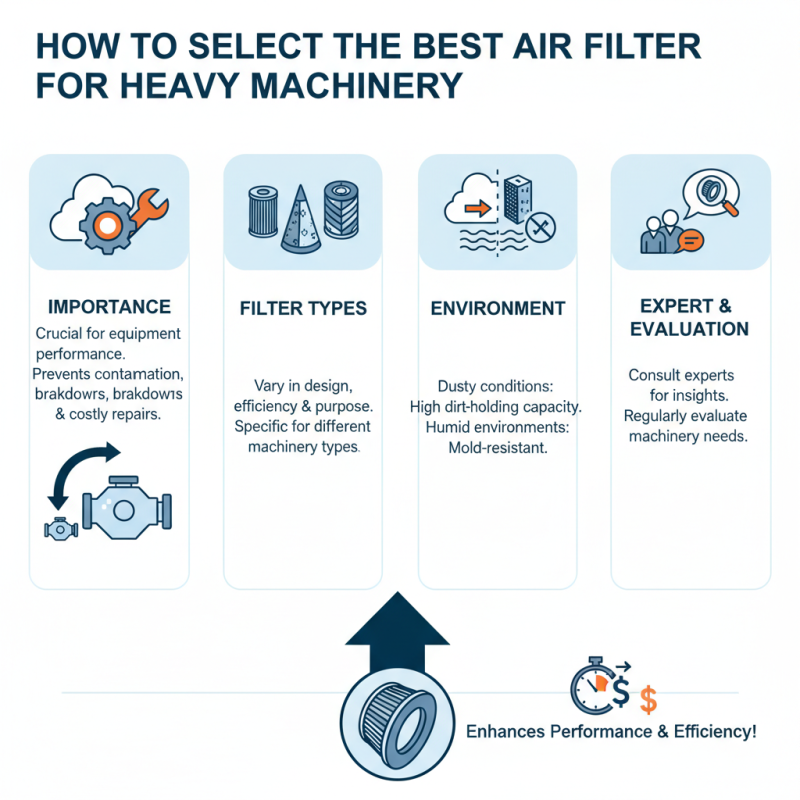
Selecting the right air filter for heavy machinery is a crucial decision. The performance and longevity of your equipment can hinge on this choice. Poor filtration leads to contamination. This can cause breakdowns and costly repairs. Therefore, understanding how to choose the right air filter for heavy machinery is essential.
Different machinery types require specific filters. These filters vary in design, efficiency, and purpose. You may find it overwhelming. However, considering the operational environment can help narrow down your options. For instance, dusty conditions demand filters with high dirt-holding capacity. On the other hand, humid environments may need filters resistant to mold and degradation.
Consulting with experts can provide valuable insights. They can guide you to filtration solutions that meet your machinery's requirements. However, relying solely on expert advice might not cover all facets. It's essential to evaluate the specific needs of your machinery regularly. This ensures the filter chosen truly enhances performance and efficiency.
When selecting air filters for heavy machinery, understanding the various types available is crucial. Heavy machinery operates in demanding environments, leading to unique air quality challenges. According to industry reports, contaminants like dust and oil mist can affect performance and maintenance. Therefore, a proper filter choice can significantly impact overall efficiency.
Bag filters, particulate filters, and HEPA filters each serve distinct functions. Bag filters are effective for larger particulate matter, while high-efficiency filters capture smaller particles. Notably, HEPA filters can remove up to 99.97% of airborne particulates, crucial for sensitive applications. However, they may require more frequent replacements and impose higher energy costs. Balancing operational costs with effectiveness is essential for optimal performance.
One must also consider filter maintenance. Regular inspections help ensure filters remain effective. Neglect can lead to reduced airflow and machinery performance. Some operators might overlook this aspect, resulting in increased downtime. Ensuring the right fit and type of air filter enhances machinery longevity and performance in challenging environments.
Choosing the right air filter for heavy machinery demands careful consideration. One critical factor is the filter's efficiency. Look for filters that can capture particulate matter effectively. This ensures cleaner air intake, which is vital for engine performance and longevity. A good filter can also reduce maintenance costs by preventing dirt buildup in engines.
Another important aspect is the filter's compatibility with your machinery. Each machine has specific requirements based on its design and operational conditions. Ensure that the filter can handle the environment where the machinery operates. In dusty or humid settings, a filter designed for such conditions can make a significant difference.
It’s also essential to evaluate the filter's lifespan. Longer-lasting filters can save time and money. However, they might require a higher initial investment. Regularly monitoring filter performance is crucial. Inefficiencies can develop over time, leading to decreased machinery performance. Balancing these factors can be challenging, but it’s necessary for optimal machine operation.
When selecting air filters for heavy machinery, evaluating filtration efficiency is crucial. Efficiency ratings indicate how well a filter captures harmful particles. A filter's performance directly affects machinery longevity. Consider filters with a high Minimum Efficiency Reporting Value (MERV). These ratings help you understand particle sizes captured.
Additionally, filter maintenance practices impact performance. Regular checks ensure filters remain effective. Neglecting this can lead to engine issues. Many operators underestimate the significance of clean filters. This oversight can result in increased downtime and costly repairs.
Choosing the right filter requires thorough research. Additionally, consult with experts who understand specific machinery needs. Engage in discussions with maintenance teams to gain insight. Their hands-on experience will inform your decision. It's also wise to stay updated on industry developments. New technologies may offer better filtration solutions.
Regular maintenance of air filters is crucial for heavy machinery. Filters can significantly impact engine performance and fuel efficiency. Studies indicate that dirty filters can reduce engine power by up to 10%. This loss can lead to higher operational costs and unplanned downtime.
Replacing air filters should be based on usage and environmental conditions. Dusty job sites require more frequent changes. If a filter's pressure drop exceeds 2 inches of water column, it's time for replacement. Many experts recommend checking filters every 200 hours of operation. However, this can vary. Always refer to the manufacturer's guidelines.
Neglecting maintenance can lead to costly repairs. Even high-quality filters can fail if not maintained properly. Timely replacements ensure optimal engine airflow and can extend machinery life. Consider developing a filter maintenance schedule for effectiveness. Keep track of replacement intervals and performance. A thoughtful approach enhances reliability and efficiency.
Selecting the right air filter for heavy machinery involves a critical balance between quality and cost. High-quality filters improve performance and extend engine life, but they often come with a higher price tag. Understanding your machinery's specific needs is essential for making a cost-effective choice.
When assessing costs, consider both short-term and long-term expenses. High-quality filters may require a larger upfront investment, but they can reduce maintenance costs and downtime. A budget-friendly filter may save money now but could lead to costly repairs later. Evaluate the filtration efficiency and dust-holding capacity alongside the price.
Tip: Always review maintenance records. They can reveal which filters offer the best longevity and compatibility with your machinery. Regularly replacing filters can prevent operational issues, ultimately protecting your investment.
Another consideration is the filter’s application. Different environments, like dusty construction sites, demand specific filter features. Investing in the right type may prevent frequent replacements and save money in the long run.
Tip: Consult manufacturer guidelines for recommendations. This ensures that you choose an air filter that meets both performance and budget requirements. Remember, balancing quality and cost isn’t just about numbers; it’s about ensuring reliable machinery performance.
| Filter Type | Initial Cost ($) | Lifespan (Hours) | Maintenance Cost ($ per year) | Efficiency (%) |
|---|---|---|---|---|
| HEPA | 150 | 2000 | 50 | 99.97 |
| Panel Filter | 50 | 1000 | 30 | 85 |
| Carbon Filter | 120 | 1500 | 40 | 90 |
| Pleated Filter | 75 | 1200 | 25 | 95 |
| Synthetic Filter | 90 | 1800 | 35 | 88 |
: Bag filters, particulate filters, and HEPA filters are commonly used. Each serves a different purpose.
Filtration efficiency impacts machine performance. Higher efficiency can prolong the machinery's life and reduce downtime.
Replace filters when pressure drops exceed two inches of water. Also, consider your working conditions.
Regular inspections are essential. Cleaning or replacing the filters prevents engine issues and maintains performance.
Yes, dirty filters can reduce engine power by 10%. This can lead to increased operational costs.
Check filters every 200 hours of operation. Conditions may vary, so adjust based on your environment.
Consider the filter type, efficiency ratings, and maintenance needs. Discuss with experts to find the best fit.
Many overlook the importance of maintaining clean filters. This can lead to costly repairs and downtime.
Yes, new technologies may offer better filtration. Staying informed can enhance machinery performance.
Track replacement intervals and schedule regular checks. A structured plan improves efficiency and reliability.
Selecting the best air filter for heavy machinery is crucial for ensuring optimal performance and longevity of equipment. To effectively understand how to choose the right air filter for heavy machinery, one must first recognize the different types of air filters available, such as mechanical filters, electrostatic filters, and high-efficiency particulate air (HEPA) filters. It is equally important to assess factors like the operating environment and specific machinery requirements, which can influence filter selection.
In addition, evaluating filtration efficiency and performance ratings is essential to ensure the chosen filter meets operational demands. Regular maintenance and timely replacements are necessary to maintain filter effectiveness, which directly impacts machinery performance. Finally, a cost analysis is vital for balancing quality and budget, ensuring that the chosen air filter provides both reliability and value over time. By following these guidelines, operators can make informed decisions that enhance machinery efficiency and reduce operational downtime.

Fisc Auto