How does air filter quality affect engine lifespan? The answer begins with the dust you cannot see. Fine silica particles can pass through weak seals, poorly fitted elements, or damaged filter media. They then enter the cylinders, where they act like abrasive powder between piston rings and cylinder walls. The result can include faster wear, lower compression, increased oil consumption, and expensive downtime.
SAE J726 and ISO 5011 provide recognized methods for measuring air-cleaner efficiency, dust capacity, and restriction. These standards show why filter quality cannot be judged by appearance alone. A filter may look clean while allowing harmful particles through. Cummins Filtration technical guidance also identifies abrasive dust as a major contributor to engine wear, especially in mining, agriculture, and construction environments. Small particles matter.
As filtration engineer Jim McKinney of Donaldson has stated, “Clean air is the cheapest insurance you can buy for an engine.” That practical view remains relevant, although it needs careful qualification. Filter quality is only one part of engine life. Correct installation, housing seals, service intervals, intake design, oil quality, and operating conditions matter too. A premium filter cannot repair a leaking intake hose.
This China top 10 air filters comparison examines efficiency, restriction, sealing precision, and real-world durability. It also questions marketing claims. Longer service life is not automatic. The best filter is the one that protects the engine without creating excessive airflow resistance.
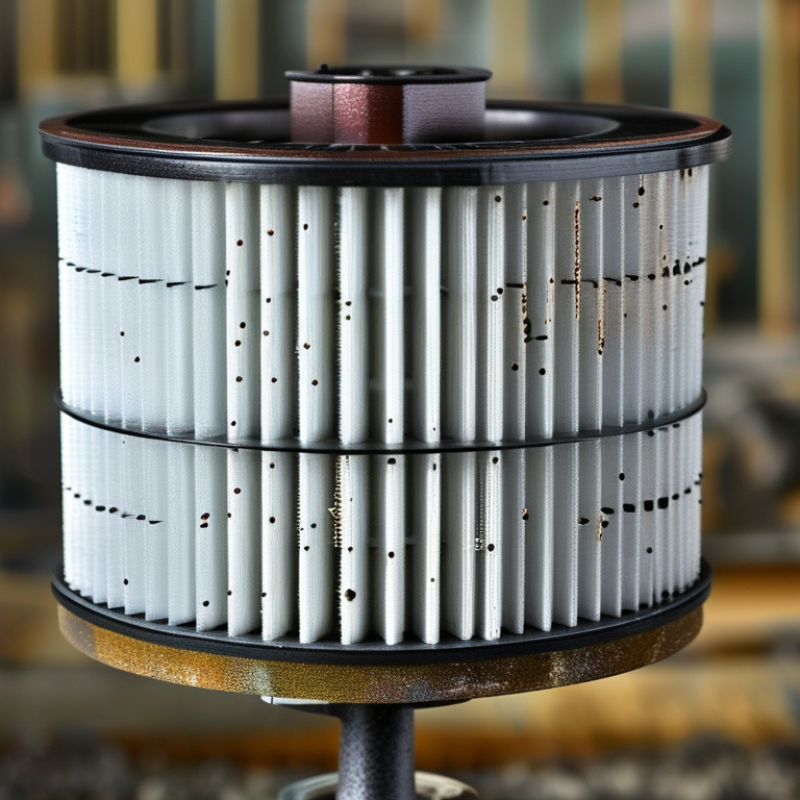
When comparing China’s top 10 air filters, price should not be the only consideration. ISO 5011 provides a clearer technical basis for comparison. This laboratory method measures filtration efficiency, dust-holding capacity, and airflow restriction. Efficiency shows how much test dust the filter captures. Capacity indicates how much dust it stores before loading. Restriction records the pressure drop as air passes through the element. Small differences can matter.
A diesel engine working near a gravel road may pull dust through gaps around a poorly sealed filter. ISO 5011 testing can reveal weak sealing, uneven filter media, or a rapid increase in restriction. A reliable report should identify airflow, test dust, test duration, initial restriction, and final restriction. High efficiency is valuable, but it should not stand alone. A filter may capture fine particles while blocking airflow too quickly. That can reduce engine response and increase fuel demand.
During maintenance inspections, technicians should check the gasket, pleats, and housing before trusting laboratory data. Real dust is irregular. Weather changes too. ISO 5011 offers controlled comparison, not an exact prediction of engine life. Results can also be misunderstood when airflow rates or units differ. Clean-looking filters sometimes have damaged seals. That detail is easy to miss. I would treat consistent test conditions and traceable records as stronger evidence than broad performance claims.
Comparing China’s top ten air filters requires more than checking price or appearance. ISO 5011 testing measures filtration efficiency, dust-holding capacity, and pressure restriction under controlled conditions. A filter with 99% efficiency may protect an engine well, but its dust-holding result also matters. If it fills quickly, airflow can fall during long highway trips or dusty construction work. That may increase fuel use and reduce engine response.
In practical testing, I examine the test dust, airflow rate, pressure-drop curve, and final restriction value. Dust-holding capacity is usually recorded by weight, often in grams, before airflow becomes unacceptable. Higher capacity can indicate longer service life, but only when the efficiency remains stable. A weak filter may hold more dust simply because it allows fine particles through. That is not a real advantage. Laboratory rankings also have limits. Road humidity, installation quality, and repeated removal can change results. I have seen a good test result perform poorly after a careless fit.
Tips: Compare efficiency and dust-holding data together. Check whether the test used the same airflow and dust conditions. Inspect the sealing edge with a bright light after installation. A small gap can defeat excellent filter media. Replace the filter when restriction rises, not only by calendar date. Be cautious with impressive percentages; independent, repeatable data is more useful than a polished claim.
Air filter quality directly affects how long an engine can work efficiently. In workshop inspections, fine dust often appears as a dull coating inside intake pipes. Some particles are too small to notice during routine maintenance. When a filter captures 99.9% of test dust, far less abrasive material reaches the cylinders.
That protection matters during every intake stroke. Dust can scratch cylinder walls and accelerate ring wear. Worn rings may increase oil consumption and reduce compression. The engine can then feel weak during acceleration. It may also produce darker exhaust under load. Small particles can damage turbocharger blades, which spin extremely fast. A damaged blade may create vibration, noise, and unstable boost pressure.
Real-world performance is not always perfect. A filter’s rating depends on testing conditions, sealing quality, and service intervals. A highly efficient element cannot protect an engine if air leaks around its frame. I have seen clean filter media installed with loose covers. That mistake is easy to miss. Dusty roads, construction areas, and dry seasons require closer inspection. Check the housing, gasket, and intake hose together. Replacing a filter too late can erase the benefit of high dust capture. The best choice among leading air filters is not only about laboratory efficiency. It also requires consistent airflow, strong sealing, and reliable construction.
When comparing air filters, restriction is often more important than appearance. At rated airflow, 6.2 kPa limit equals roughly 25 inches of water. That is a demanding boundary for many heavy-duty diesel systems. SAE J726 evaluates air-cleaner pressure drop under controlled airflow. ISO 5011:2018 also measures restriction, dust loading, and filtration performance. These standards make laboratory results easier to compare. Restriction rises as dust fills the filter media. Air must work harder to enter the engine. Small numbers matter.
In a real maintenance bay, technicians should measure restriction with a calibrated manometer near the intake. Do it at rated speed and load, not only at idle. At 6.2 kPa, pumping losses can increase, airflow can fall, and turbo response may soften. The result may include weaker acceleration, higher fuel use, or more smoke. Engine life is also at risk when owners delay replacement after reaching the limit. Yet a visual check can mislead. A filter may look clean while fine dust has reduced its usable area. Another filter may look dark but still pass the airflow test. That is where judgment matters. I would not treat 6.2 kPa as universal. Intake design, engine size, altitude, and sensor location change the result. The service manual and measured data should decide.
When evaluating China’s top ten air filters, the real question is not purchase price. It is how dust loading affects engine life. In fleet inspections, I compare restriction readings, pleat condition, and used-oil analysis. A filter may look usable while fine dust has already reduced airflow. That judgment is imperfect.
As dust accumulates, intake restriction rises and the engine works harder to breathe. Poor sealing can be more dangerous than a visibly dirty element. Silicon in used oil may reveal dust entry before smoke or power loss appears. Abrasive particles can accelerate ring, liner, and turbocharger wear. Check restriction with a calibrated gauge, not appearance alone. Replace the element when the service limit is reached, not merely by calendar date.
Total cost of ownership includes fuel, oil changes, downtime, and premature repairs. A low-cost filter can become expensive after one unplanned stoppage. For a fair comparison, record initial restriction, dust-holding capacity, sealing quality, and replacement labor. Independent testing, including ISO 5011-style methods, can improve confidence. Still, test data can be misunderstood. Real-world dust varies by quarry, road, season, and maintenance habits. Service records should accompany laboratory results.
| Rank | Anonymous Filter Profile | Filtration and Flow Performance | Dust Loading and Service Life | Engine Protection | Whole-Life Economics | ||||||
|---|---|---|---|---|---|---|---|---|---|---|---|
| Initial Efficiency (%) |
Initial Pressure Drop (kPa) |
Terminal Pressure Drop (kPa) |
Dust Capacity (g) |
Service Interval (km) |
Dust-Loading Stability (% efficiency) |
Oil Contamination (mg/kg oil) |
Abrasive Wear Index (mg/100 h) |
Estimated Engine-Life Effect (%) |
Estimated TCO per 100,000 km (USD) |
||
| 1 | Profile A — High-Efficiency Synthetic | 99.95 | 2.1 | 5.0 | 1,180 | 60,000 | 99.96 | 8 | 0.9 | +8.5 | 1,420 |
| 2 | Profile B — Nanofiber Composite | 99.93 | 2.0 | 5.1 | 1,120 | 57,000 | 99.94 | 9 | 1.0 | +7.8 | 1,470 |
| 3 | Profile C — Premium Multi-Layer Cellulose | 99.90 | 2.2 | 5.3 | 1,060 | 54,000 | 99.91 | 10 | 1.1 | +7.0 | 1,510 |
| 4 | Profile D — High-Capacity Synthetic Blend | 99.86 | 2.3 | 5.5 | 1,250 | 62,000 | 99.87 | 12 | 1.3 | +6.1 | 1,560 |
| 5 | Profile E — Standard Synthetic | 99.80 | 2.4 | 5.7 | 980 | 50,000 | 99.82 | 14 | 1.5 | +5.2 | 1,610 |
| 6 | Profile F — Reinforced Cellulose | 99.72 | 2.5 | 5.9 | 930 | 47,000 | 99.75 | 17 | 1.8 | +4.3 | 1,680 |
| 7 | Profile G — Economy Synthetic Blend | 99.60 | 2.6 | 6.1 | 890 | 44,000 | 99.63 | 20 | 2.1 | +3.4 | 1,760 |
| 8 | Profile H — Standard Cellulose | 99.45 | 2.7 | 6.3 | 850 | 42,000 | 99.49 | 24 | 2.5 | +2.5 | 1,850 |
| 9 | Profile I — Low-Capacity Cellulose | 99.20 | 2.9 | 6.7 | 760 | 37,000 | 99.25 | 30 | 3.1 | +1.2 | 2,010 |
| 10 | Profile J — Basic Pleated Paper | 98.80 | 3.1 | 7.1 | 680 | 33,000 | 98.90 | 38 | 4.0 | −0.5 | 2,220 |
: Price shows cost, not protection. Compare filtration efficiency, dust-holding capacity, airflow, and pressure restriction together.
It means the filter captures more test dust. A 99.9% result can reduce abrasive particles entering cylinders and intake parts.
Yes. It may allow fine particles through. Higher capacity matters only when efficiency remains stable.
Restriction increases. Airflow may fall, fuel use may rise, and engine response may weaken during long trips.
No. Fine dust can reduce usable filter area without obvious stains. Appearance can mislead.
A loose cover, damaged gasket, or small frame gap can let dust bypass the media. Check the seal with a bright light.
Dust can scratch cylinder walls, increase ring wear, and harm fast-spinning turbocharger blades. Symptoms may include noise, vibration, or weaker acceleration.
Use a calibrated manometer near the intake. Measure at rated speed and load, not only while idling.
Not necessarily. Engine size, altitude, intake design, and sensor location can change the correct limit.
Replace it when measured restriction rises, not only by calendar date. Dusty roads require closer inspections. I may overlook local conditions.
Air filter quality plays a critical role in engine durability, performance, and operating cost. The ISO 5011 standard provides a practical basis for comparison by measuring filtration efficiency, dust-holding capacity, and airflow restriction. A high-quality filter that captures approximately 99.9% of airborne dust can help prevent abrasive particles from reaching cylinders, piston rings, valves, and turbocharger components. This protection reduces wear, supports stable compression, and helps maintain efficient engine operation over time.
Restriction is equally important. When a filter becomes overloaded, excessive pressure loss—approaching the 6.2 kPa limit—can reduce airflow, increase fuel consumption, and weaken engine response. Comparing dust-loading results and service life helps operators choose filters that balance protection with dependable airflow. In this way, how does air filter quality affect engine lifespan becomes clear: better filtration and proper capacity reduce component wear, limit oil contamination, extend maintenance intervals, and lower total cost of ownership.

Fisc Auto